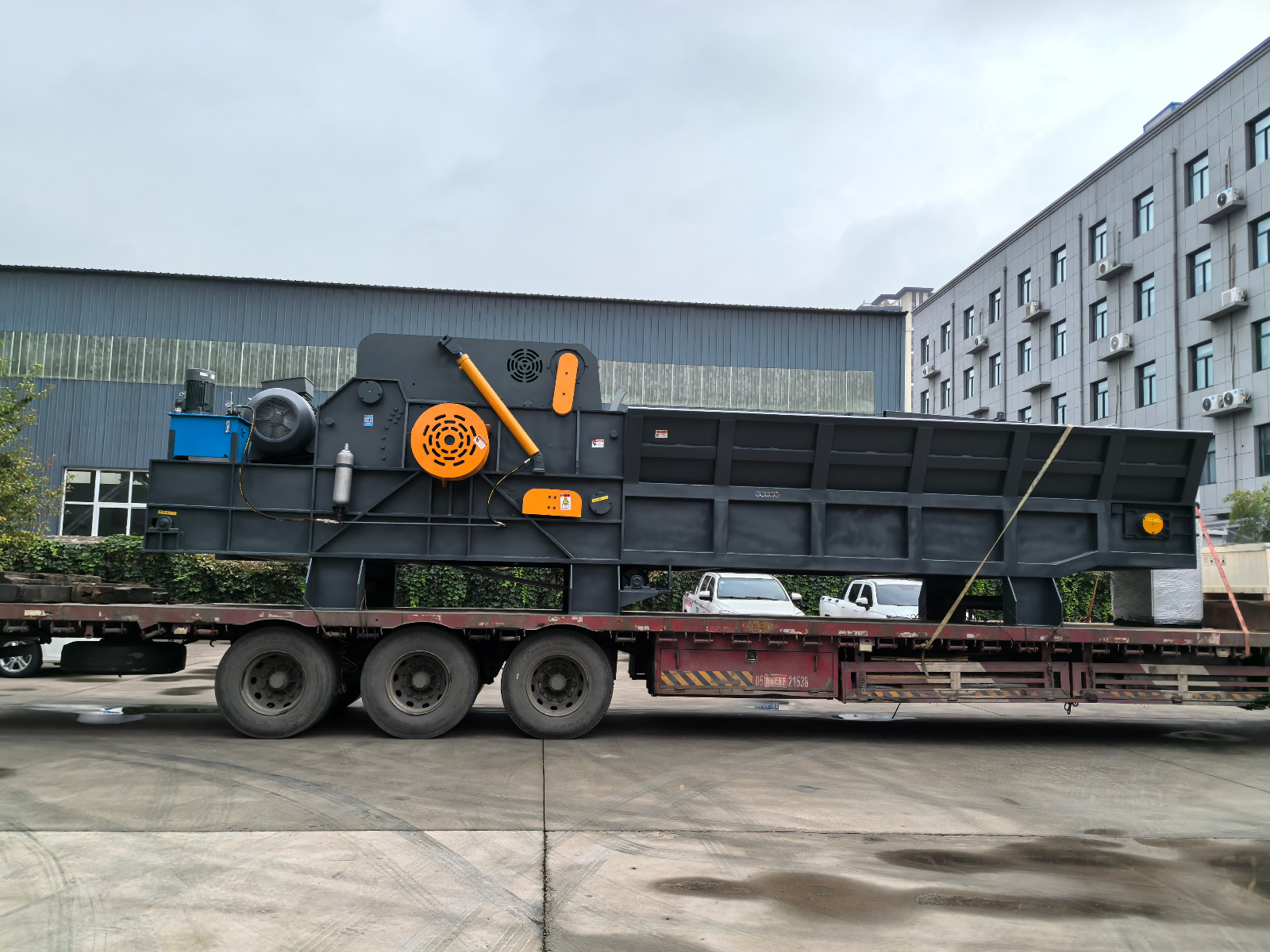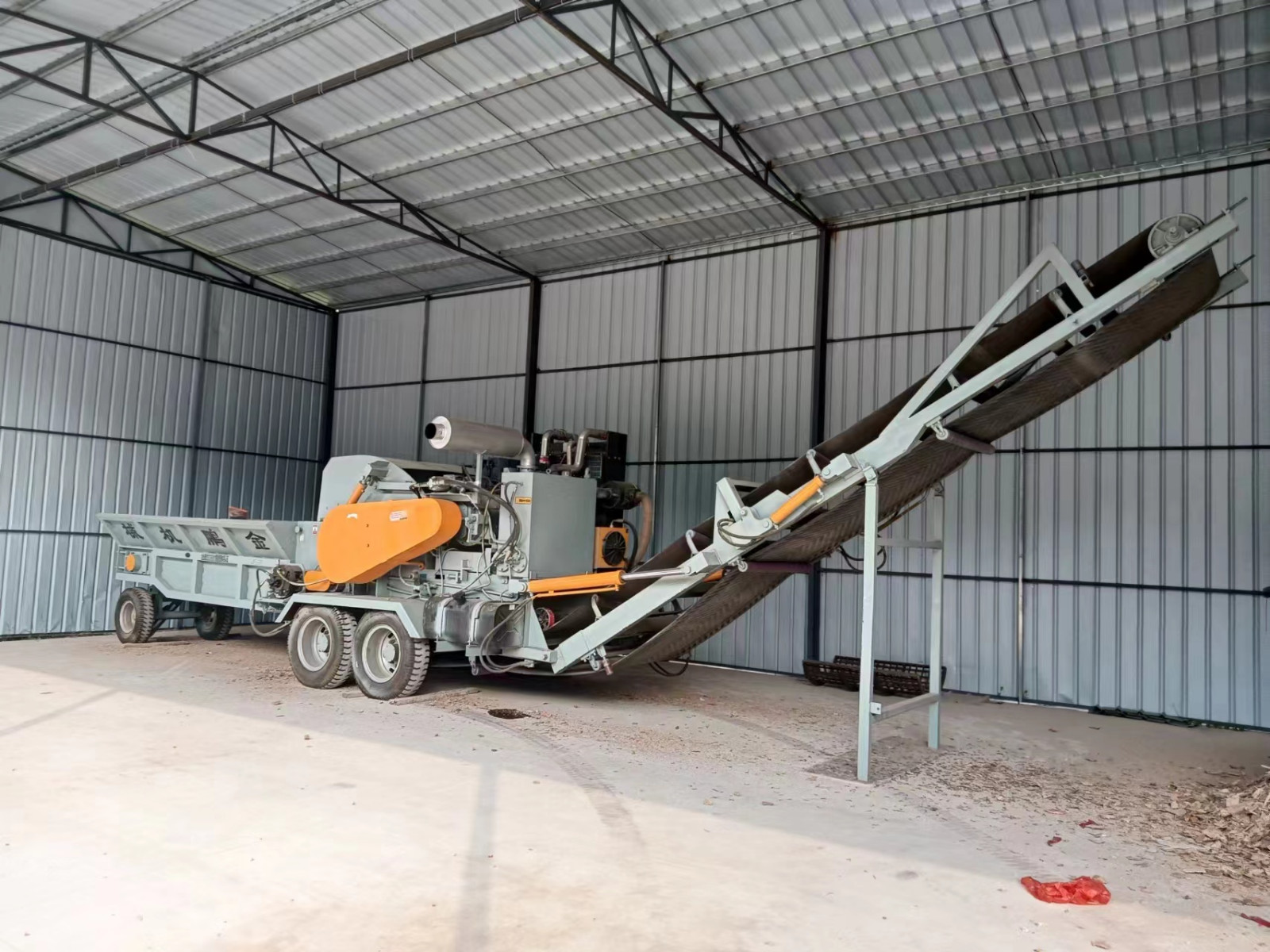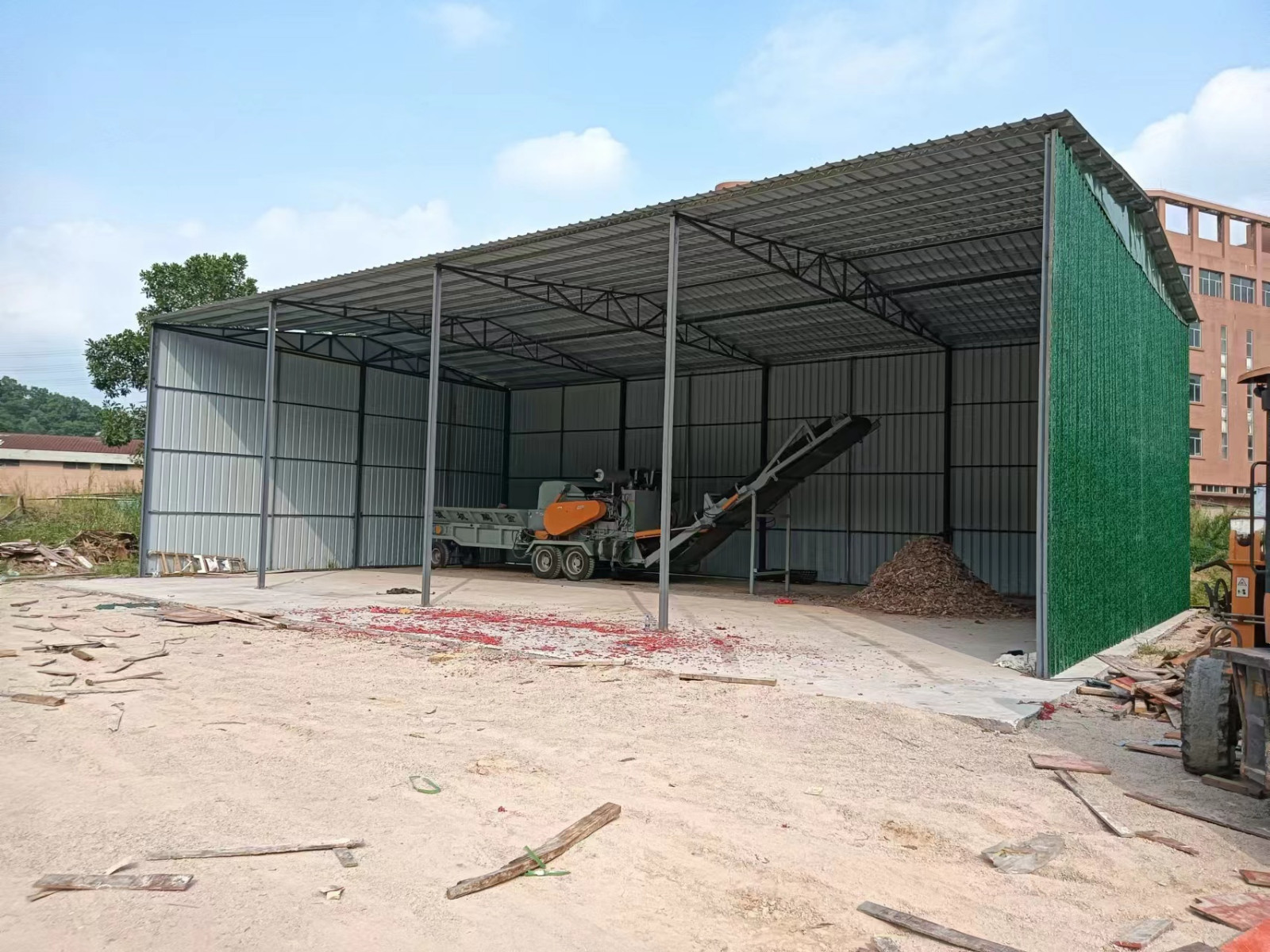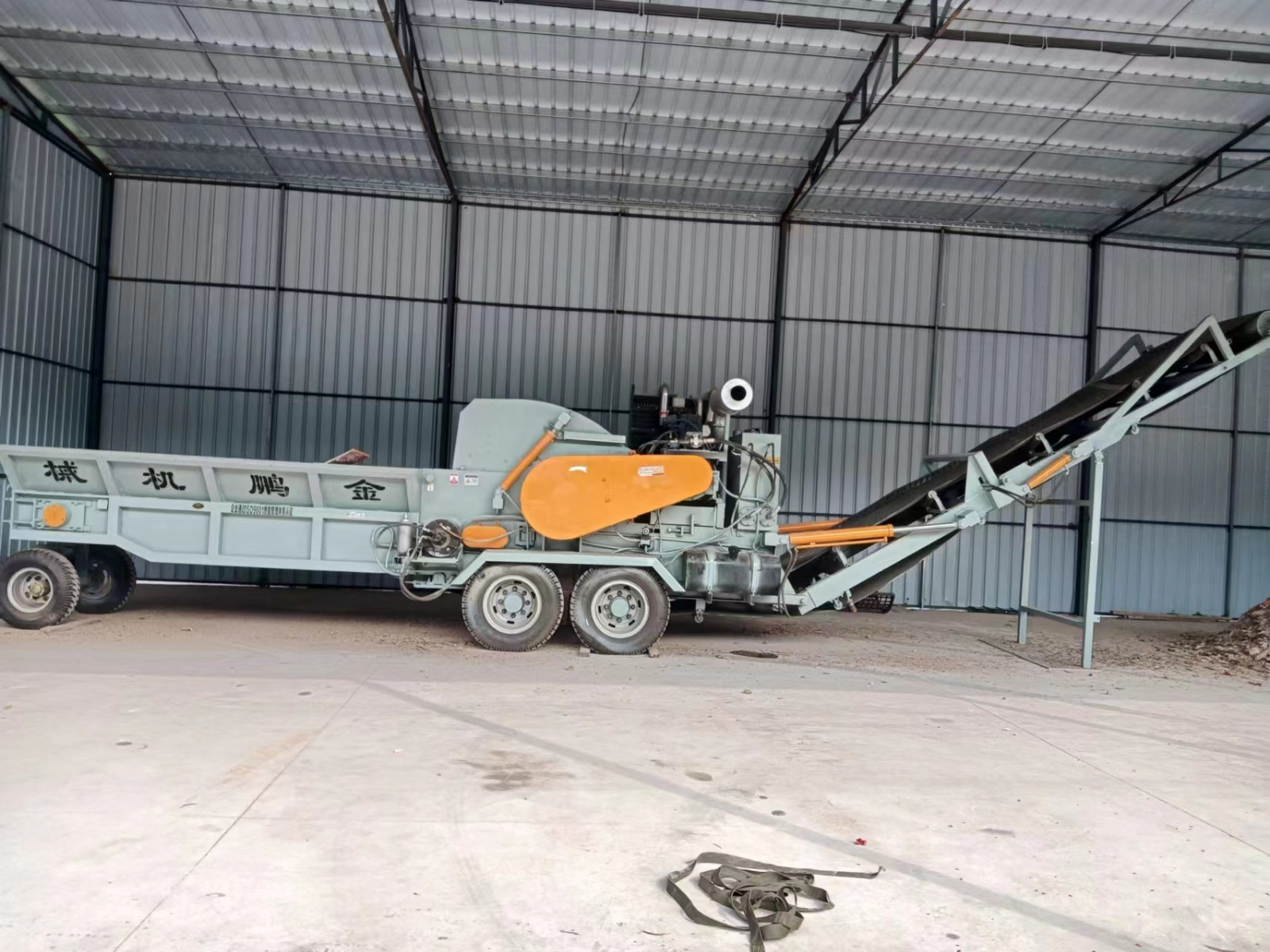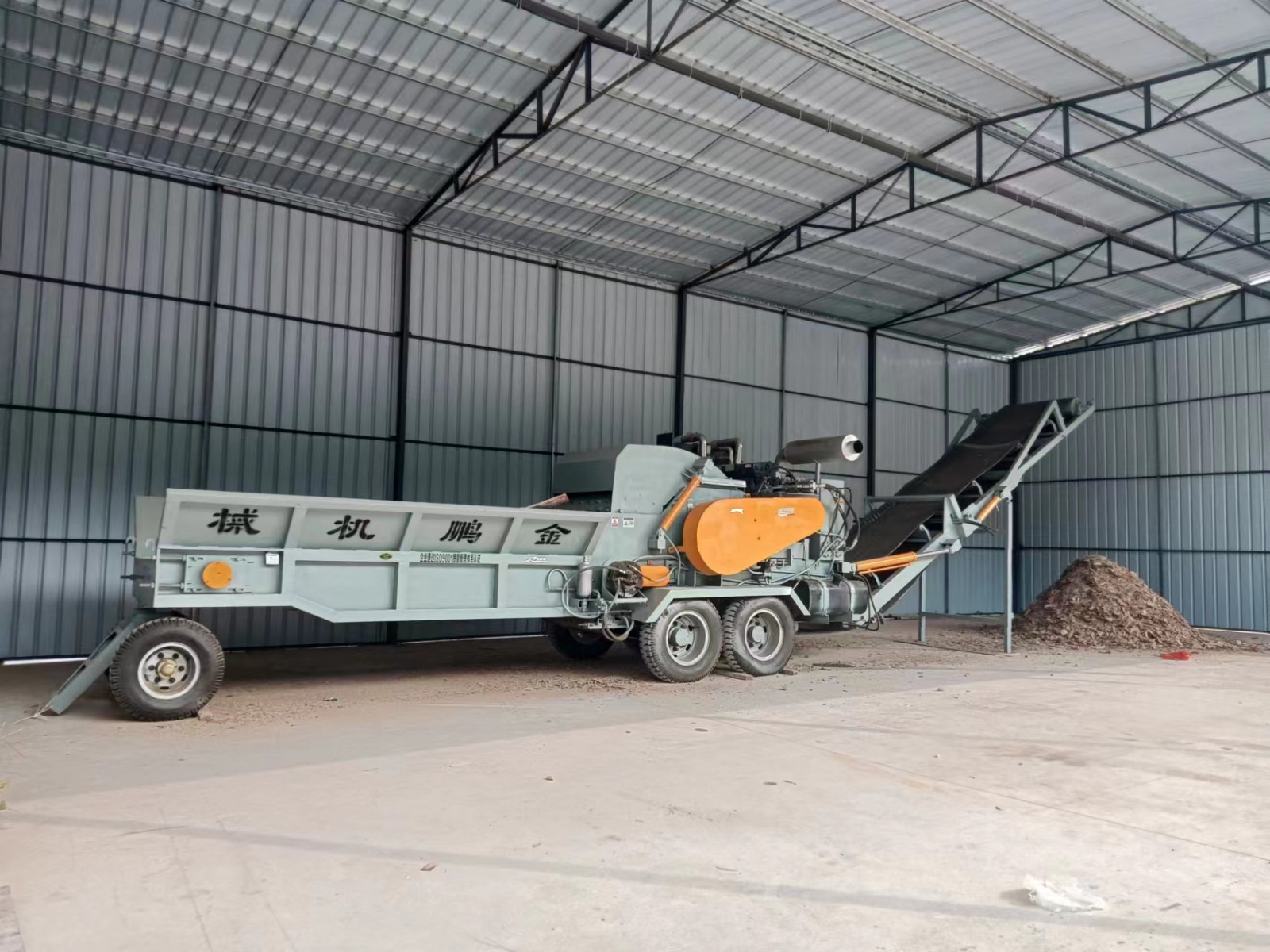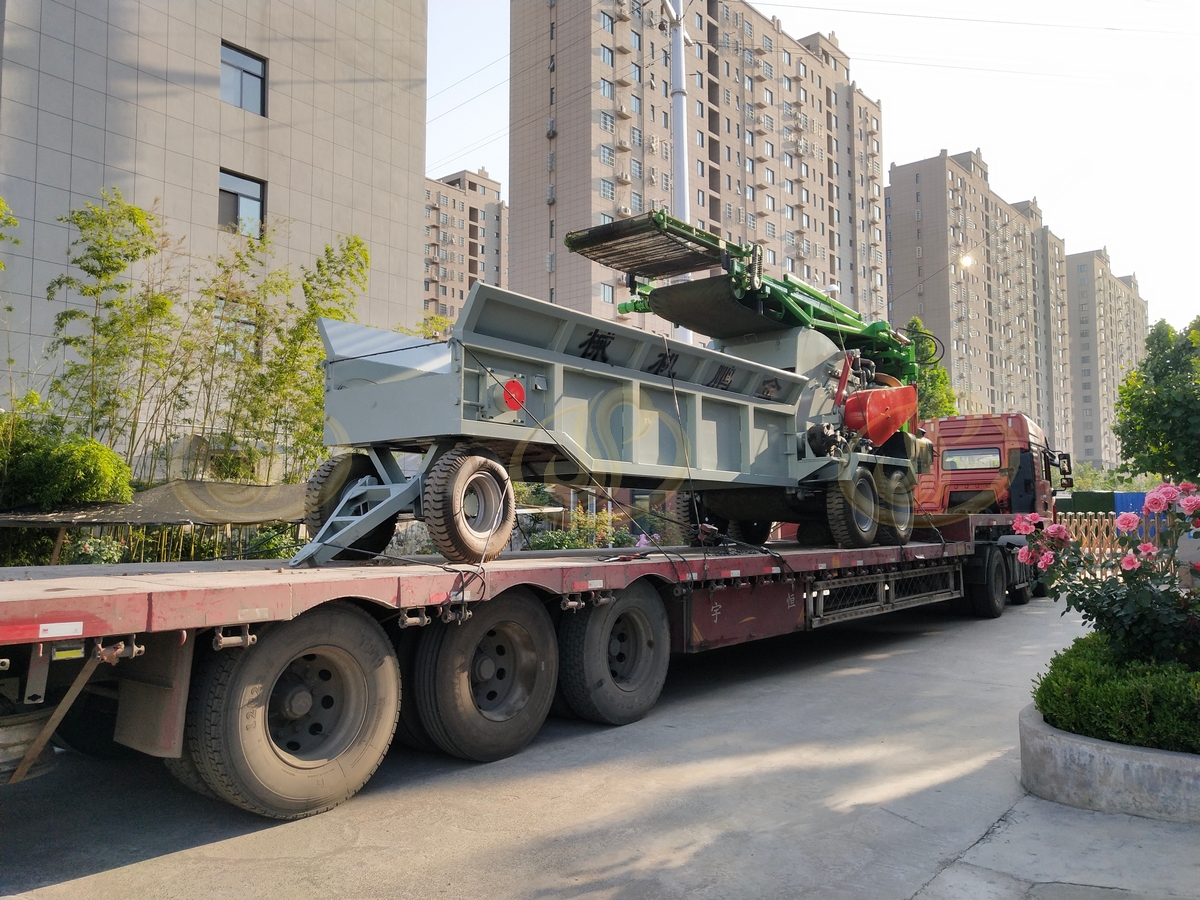
In a lumber mill yard, accumulations of bark, slabs, edgings, and trim blocks represent both a disposal cost and a potential resource. A mobile wood grinder, such as a Zhengzhou Jinpeng JP2000 configured with a diesel engine, is driven between these piles to process the residue directly.
At the stockpile, an excavator or loader feeds the mixed mill waste—ranging from stringy bark to heavy slab wood—onto the machine's aggressive chain feed. The conveyor drags the material into the grinding chamber where a rotor with swinging hammers or fixed tools reduces it through impact and attrition. The grind size is determined by a screen grate, and the output is conveyed away as a steady stream of wood chips.
The diverse mix of mill by-products, often wet and stringy, is converted into a homogeneous pile of biomass chips. This process achieves a dramatic reduction in pile volume, freeing up yard space. The irregular waste becomes a consistent, stackable product that is easier to manage, transport, or sell.
The grinder's structure is built for this abrasive, variable diet. The rotor assembly is balanced for smooth operation under shock loads from dense wood blocks. The grinding chamber liners and tooling are made from wear-resistant materials to extend service life. The heavy-duty feed system is designed to handle long, stringy material like bark without jamming.
Mobility is key. The diesel-powered, wheel-mounted configuration allows the machine to be quickly moved by a semi-truck between different waste piles within the large yard or even to satellite locations, processing material where it lies without needing permanent infrastructure.
Site challenges include handling material with high and variable moisture content from fresh mill waste, which can affect throughput and chip quality. The feedstock size and shape are highly inconsistent, from fine bark to large slabs. Continuous operation is needed to keep up with daily mill output, demanding machine reliability.
The mill gains immediate benefits: valuable yard space is reclaimed, waste handling costs are lowered, and a new revenue stream is created from the biomass chips. The processed material is ideal for on-site boiler fuel, landscaping mulch, or sale to pellet plants, turning a cost center into a potential profit center.
For lumber mills seeking to manage their wood waste stream, Zhengzhou Jinpeng's mobile grinders offer a flexible solution. The company understands the need for durable equipment in such high-volume, abrasive applications and provides relevant after-sales support for sustained operation.