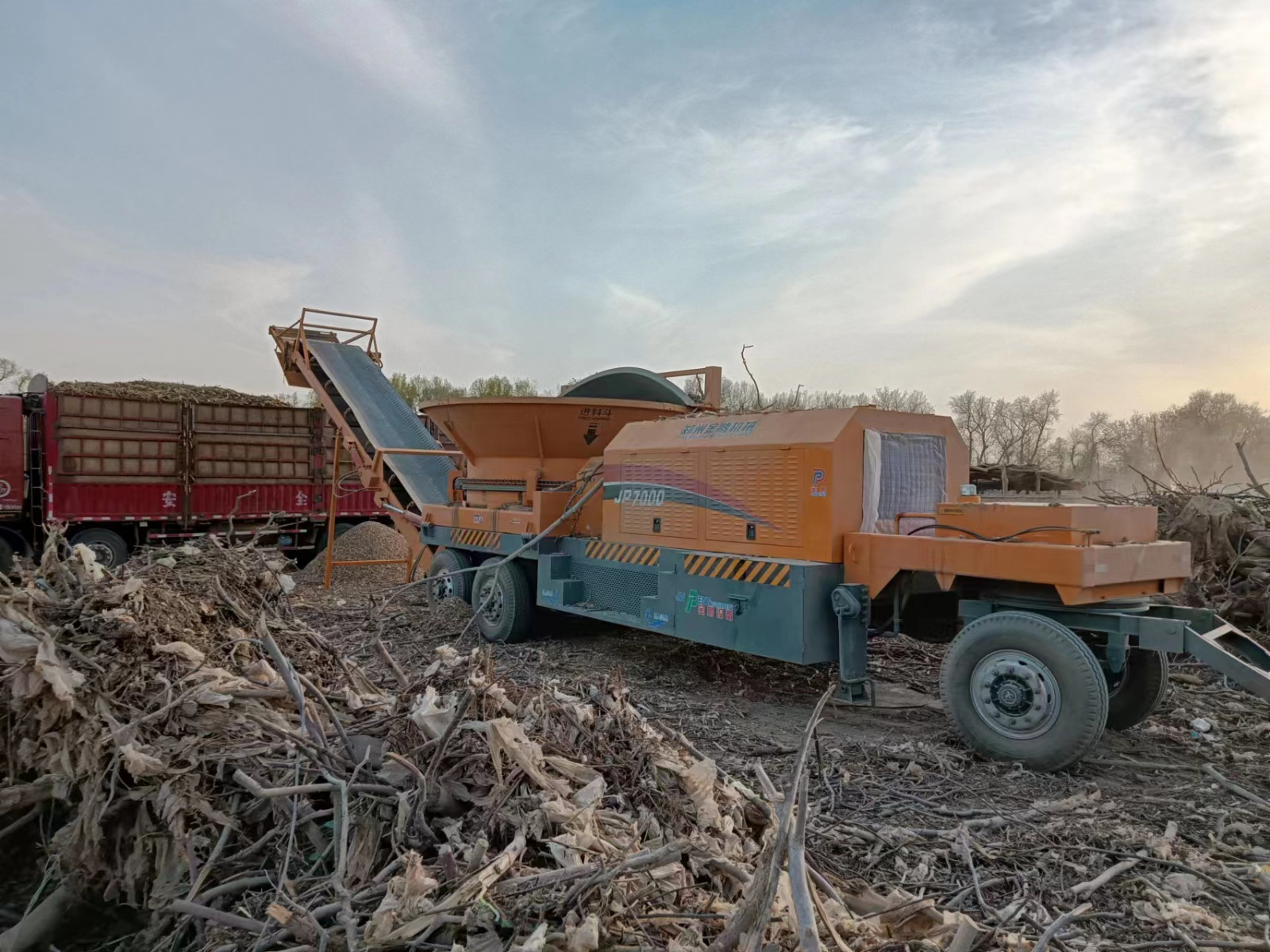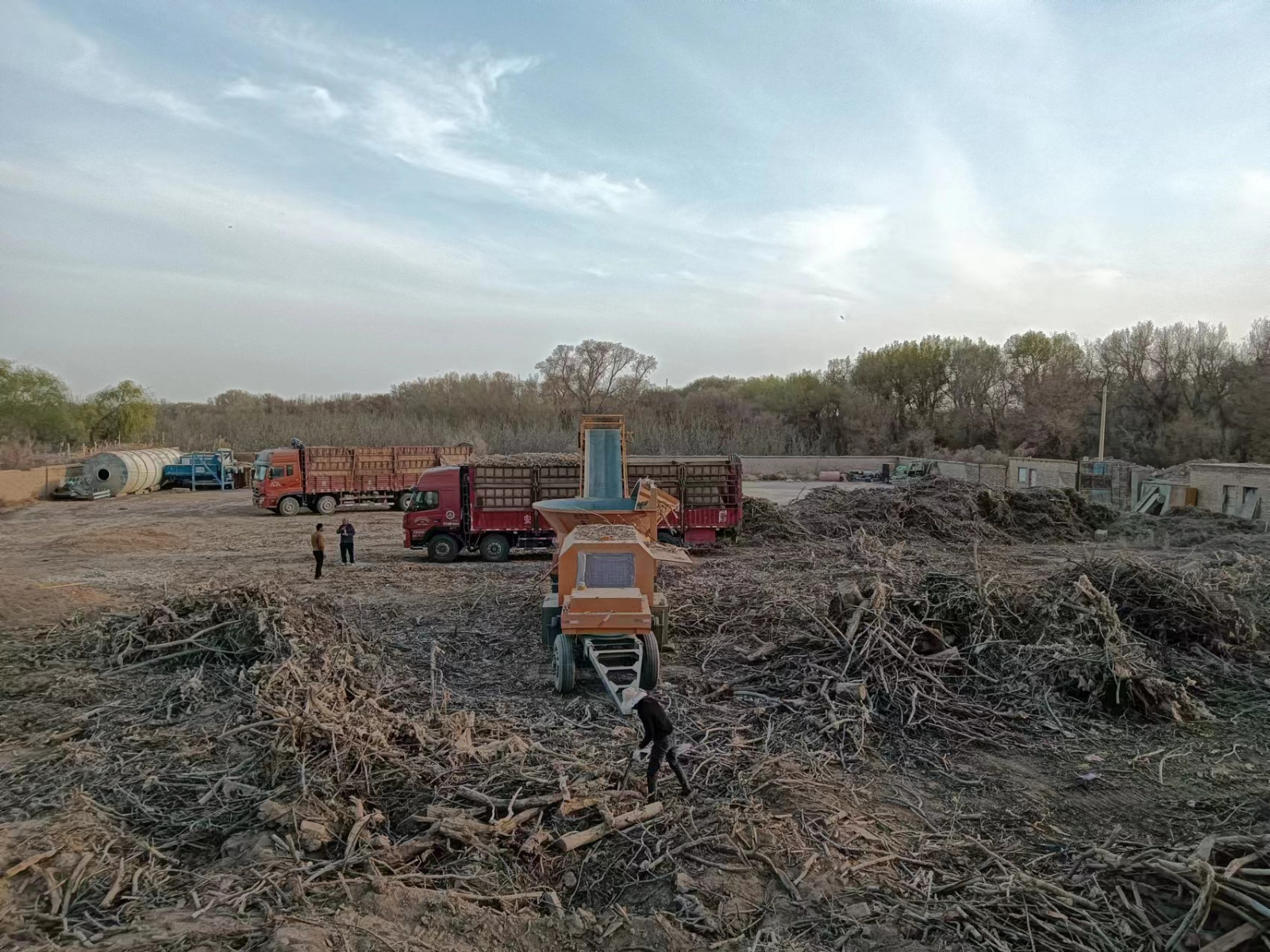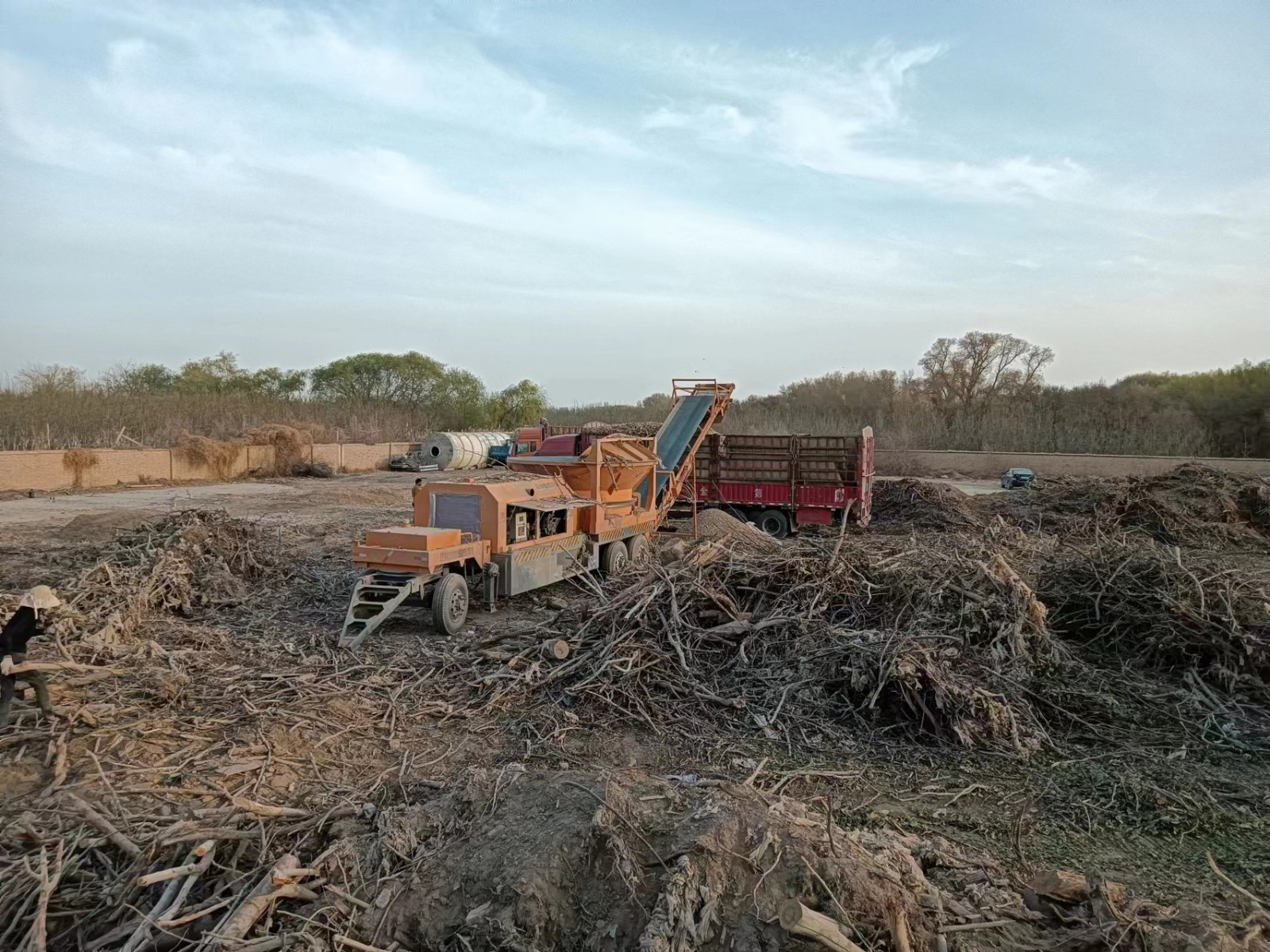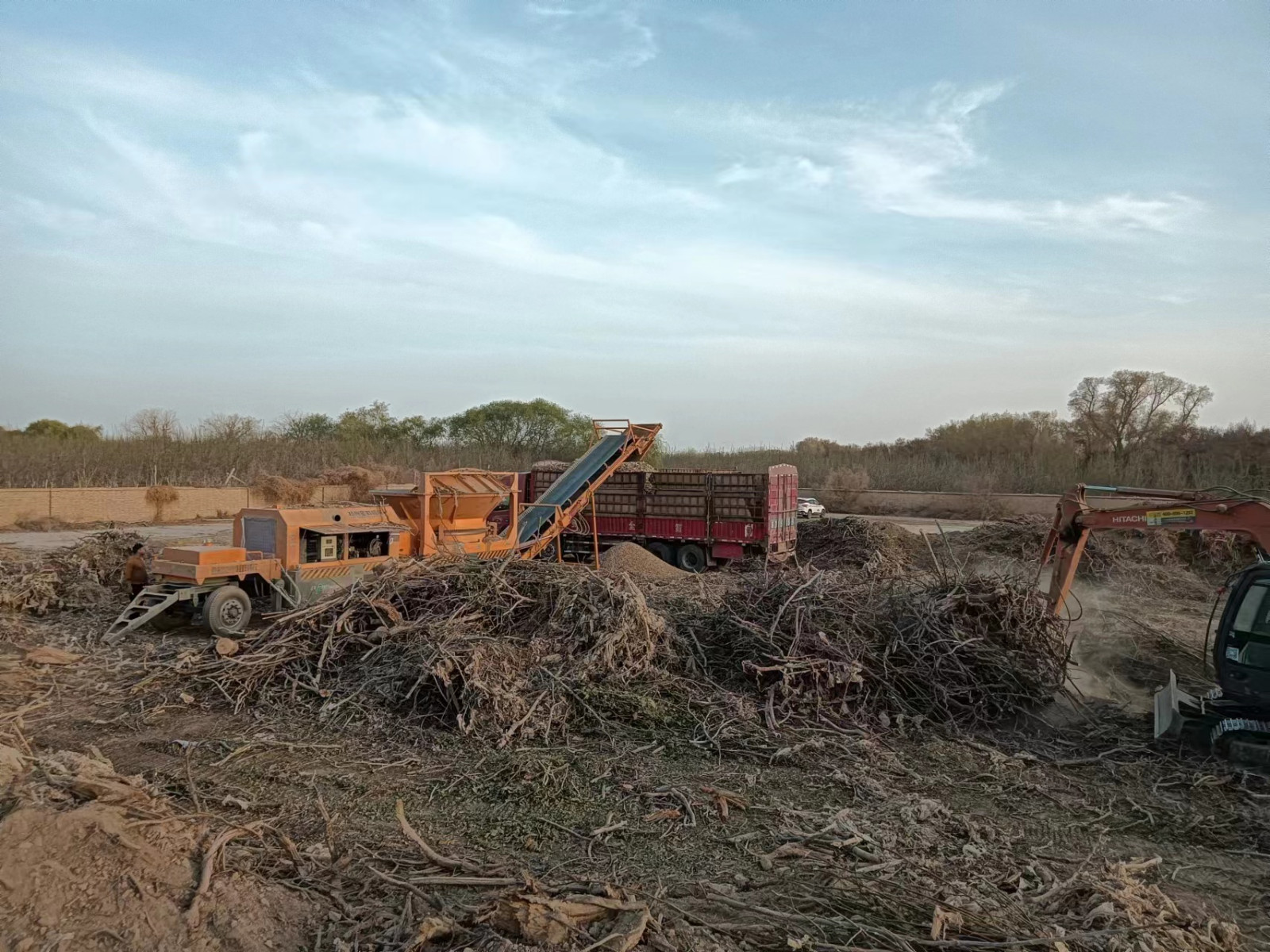
At a biomass yard, mixed wood waste is stacked in long rows, including branches, pallet wood, used boards, and loose biomass material waiting beside the feed area. A JP1400 Horizontal Grinder moves into position near the stockpile, and the loader starts bringing material forward without long pre-sorting. The scene is practical rather than tidy. The machine is expected to deal with different shapes and different lengths in one working shift, which is exactly why this kind of equipment is used on site instead of relying on manual cutting and repeated transport.
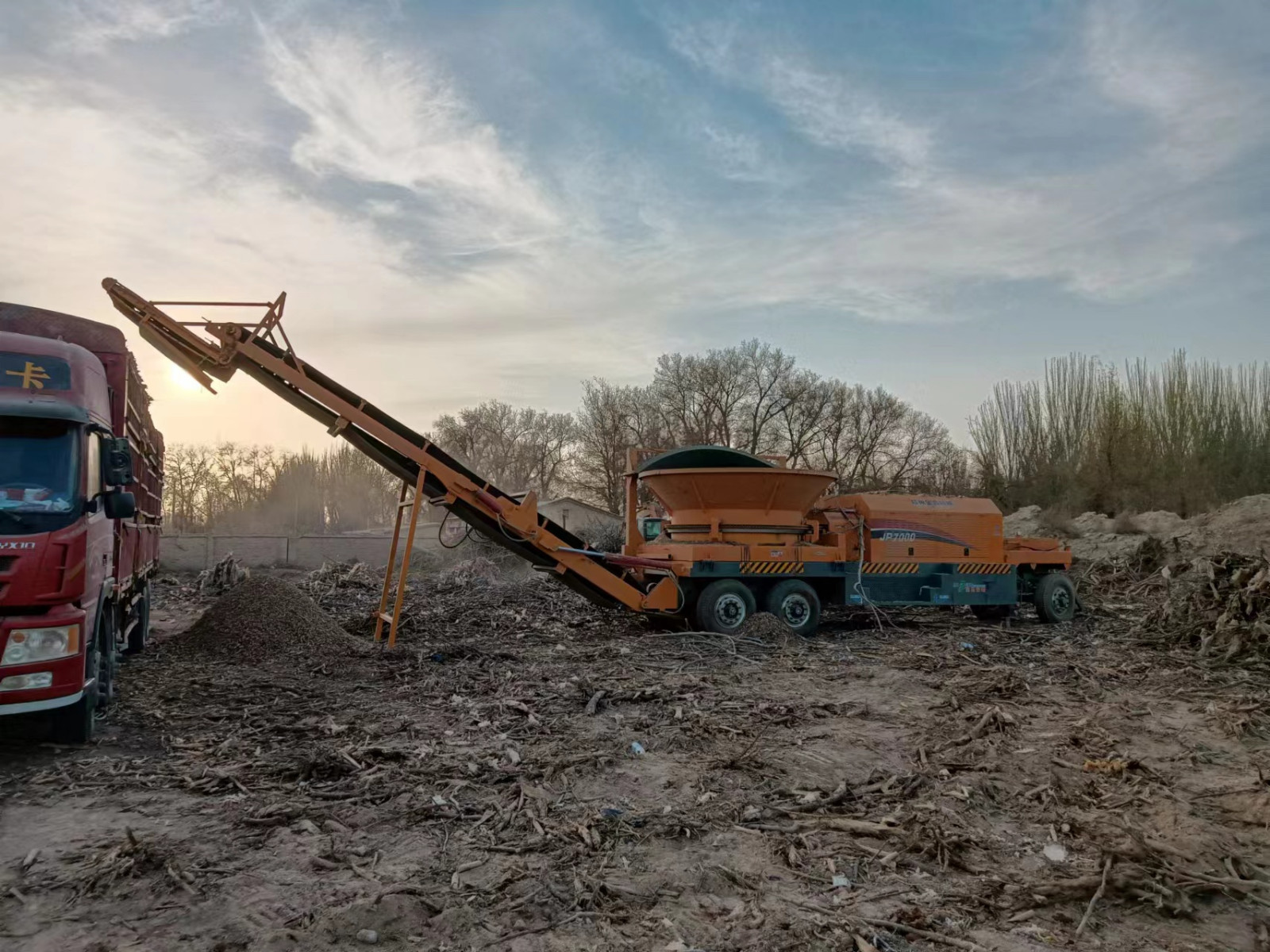
In actual operation, the process starts with loader feeding. The bucket lifts mixed wood waste and drops it into the hopper, where the chain conveyor takes over and keeps the material moving toward the grinding chamber. Once inside, the rotor fitted with cutting tools begins to pull, cut, and reduce the feed. Long branches bend and break, pallet sections are drawn inward, and old boards are gradually opened up as the rotor continues under load. The discharge conveyor then carries the coarse output away from the machine so the next batch can enter without interruption. This feeding, conveying, grinding, and discharge sequence is the part site visitors usually watch most closely, because it shows how the equipment actually works rather than how it is described in a sales sheet.
During processing, the material changes visibly. Loose, bulky wood waste becomes coarse biomass material or wood chips with a much lower volume. Piles that once occupied a wide area of the yard turn into denser output that is easier to load, stack, and move. The change is not only about size reduction. It also improves handling and makes later transport more practical.
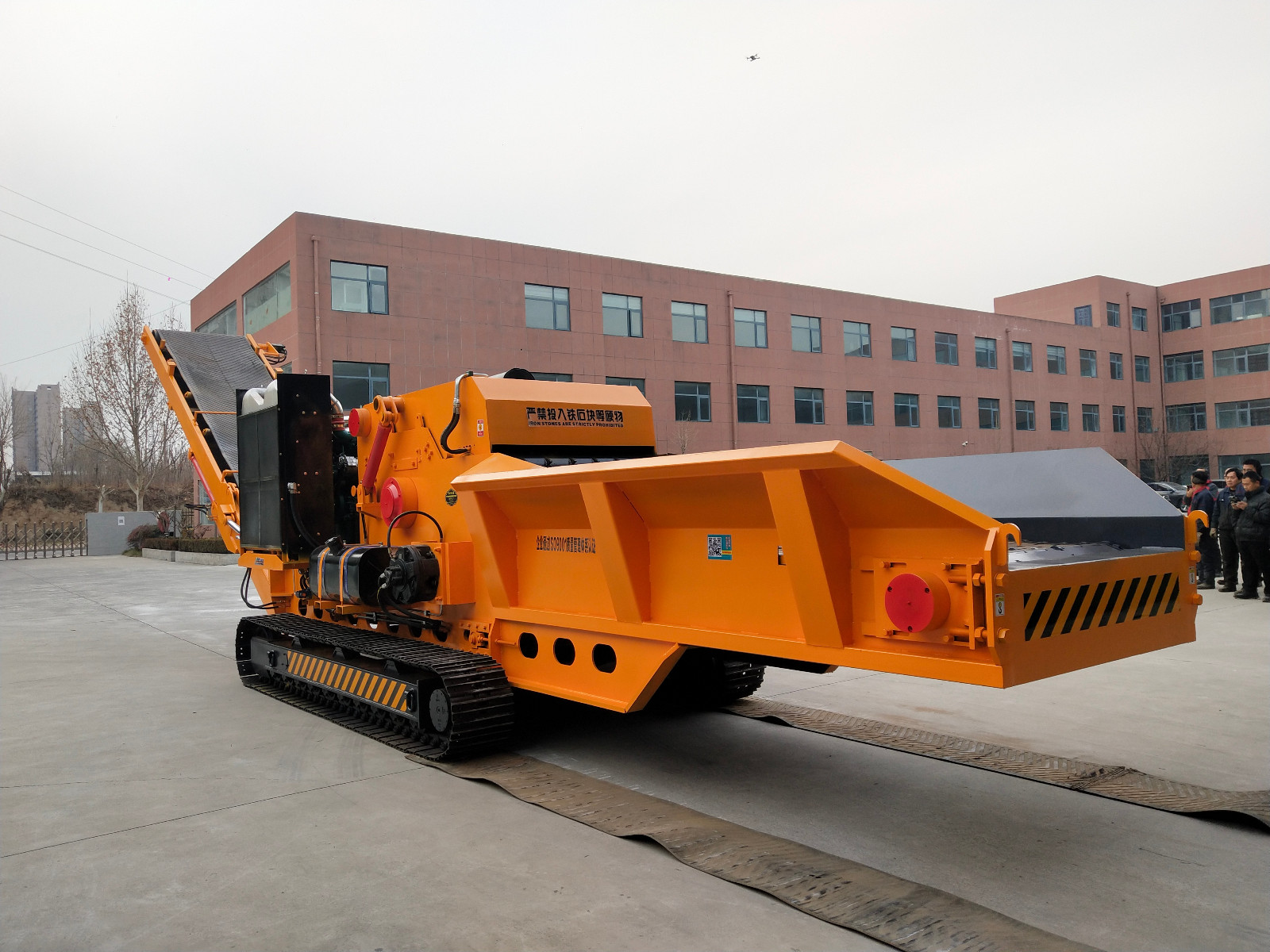
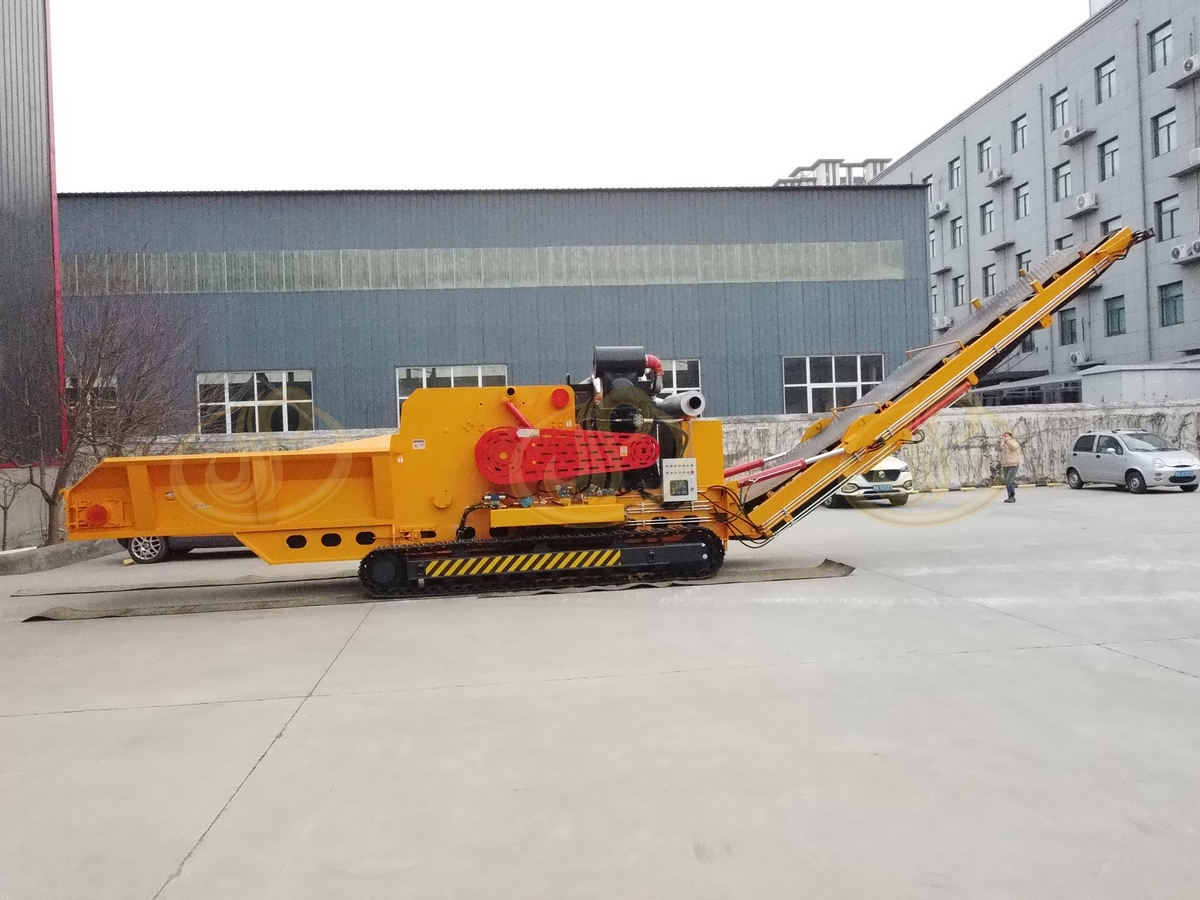
The visible structure is straightforward when seen from the working side. The rotor is the main working part, the cutting tools do the direct reduction, and the conveyor structure controls both feed movement and discharge flow. On site, these are the components operators follow when judging whether the machine is running smoothly.
A diesel engine is often the preferred choice for temporary stockyards or outdoor biomass projects where no stable power supply is available. An electric motor is more suitable for a fixed yard that already has a prepared layout. Wheel-mounted machines help when towing between different working areas is common, while tracked versions are more practical for moving across rough ground or shifting directly from one pile to another. Under field conditions, this flexibility is one of the reasons users search for terms like Zhengzhou Jinpeng tracked horizontal grinder when comparing equipment for changing site conditions.
Two site problems are common in this kind of work. One is uneven feedstock, because branches, pallet wood, and boards never arrive in one uniform size. Another is moisture variation, especially when the stockpile has been exposed to rain or when green waste is mixed into the load. Continuous feeding is also important, because the machine performs best when loader rhythm and conveyor rhythm stay coordinated.
The practical result is easy to understand. Material volume is reduced, truck loading becomes more efficient, and the output is suitable for biomass fuel preparation or further sorting. Zhengzhou Jinpeng Mechanical Equipment Co., Ltd. supplies this kind of wood grinder and horizontal grinder for real yard applications, and its support usually includes commissioning, operator training, and response after installation. That is why search terms such as Zhengzhou Jinpeng wood grinder, Zhengzhou Jinpeng horizontal grinder, mobile wood grinder, and wood waste processing often lead users to this type of equipment discussion.