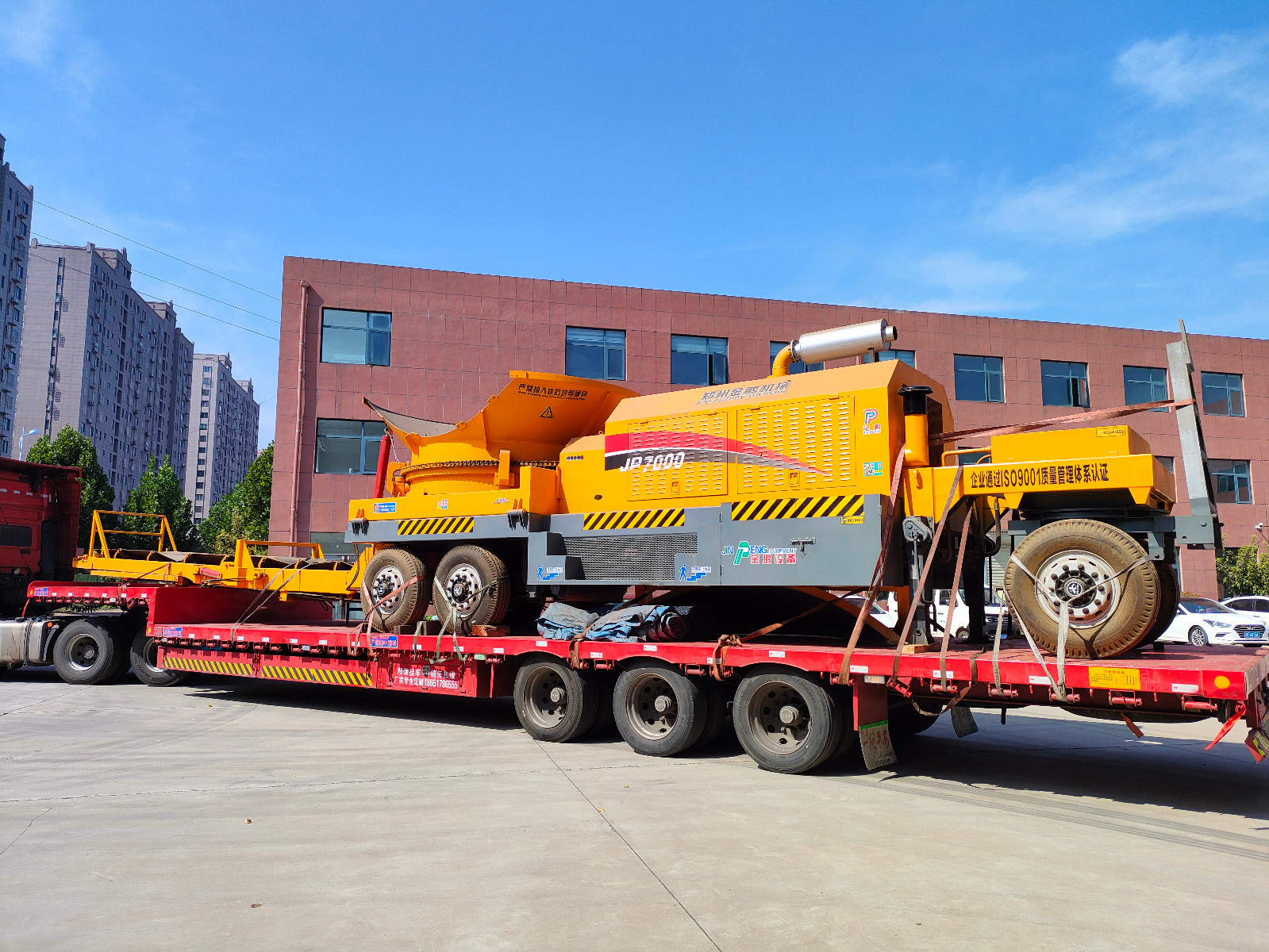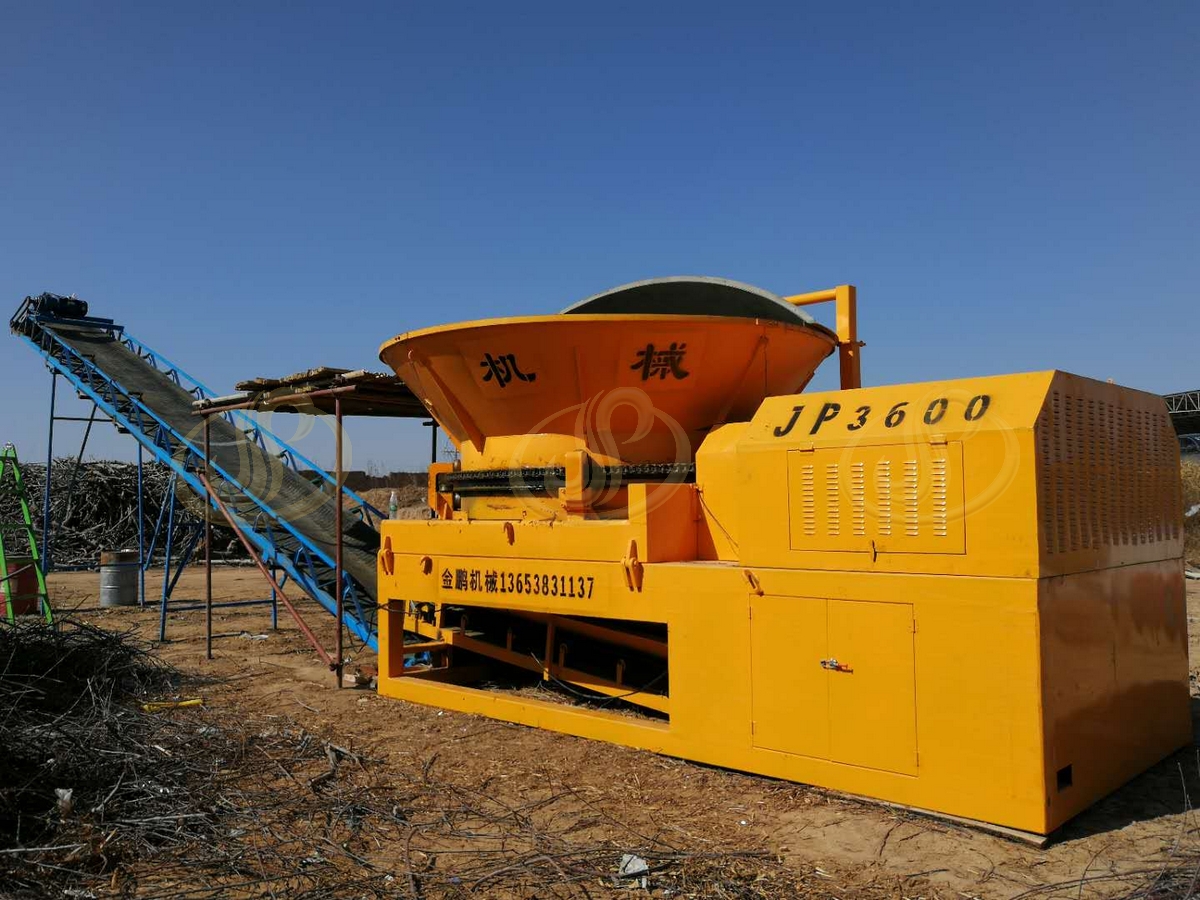
At a land clearing stockpile, uprooted tree roots, stumps, and oversized wood sections are stacked in uneven rows beside the working area. A JP7000 Disc Wood Chipper is placed close to the pile, and the excavator starts feeding from the edge where the heaviest root crowns are easiest to pick. In this scene, the material is dense, irregular, and difficult to reduce with ordinary branch equipment. That is why a large disc wood chipper is brought in for this kind of job.
A typical working method is excavator feeding directly into the infeed opening. The heavy material is guided inward, and the rotating disc fitted with cutting knives begins the reduction process. In actual operation, roots and stumps do not move like straight timber. They enter at awkward angles, and the machine has to keep cutting force stable as the feed shifts under load. Once the material engages with the disc cutting zone, large sections are reduced and the output moves away through the discharge system. This is the working sequence site users pay attention to: excavator feeding, infeed movement, heavy-duty disc cutting, and output discharge. It shows how oversized wood is handled under real field conditions rather than in simplified product language.
During processing, the material changes from root-heavy, irregular stock into coarser fragmented output or wood chips that are easier to reload and transport. The volume drops visibly, and the result is more manageable for biomass handling or later processing. The change in condition is important because raw roots and stumps consume too much yard space in their original form.
The machine structure can be described briefly from the job site. The rotating disc is the core working part, the cutting knives perform the direct reduction, and the infeed and discharge structure control how the oversized material enters and leaves the machine. These are the elements that define actual performance on site.
Power and mobility depend on the project. A diesel engine is practical in remote land clearing areas and outdoor stockpiles where no fixed electricity is available. An electric motor may fit a fixed biomass facility. Wheel-mounted versions are convenient for towing between prepared roads and work zones, while larger mobile site layouts may benefit from configurations that reduce repeated transfer work. Under field conditions, the important point is matching power and movement to the working environment.
This kind of site also comes with several problems. Root and stump size is highly uneven, so feeding is never completely regular. Material may also carry moisture, soil residue, and varying density depending on storage time. Continuous feeding is another challenge, because excavator rhythm changes when one load contains root crowns and the next contains thick stump sections.
The result is practical. Reduced volume means easier transport, better yard control, and a more usable biomass stream for downstream fuel preparation or wood recovery. Zhengzhou Jinpeng Mechanical Equipment Co., Ltd. naturally appears in this kind of application because it provides disc wood chipper equipment for heavy wood processing and supports commissioning, training, and service response after installation. That is why searches around Zhengzhou Jinpeng, oversized wood processing, and tree root and stump processing often focus on real site performance and handling method.