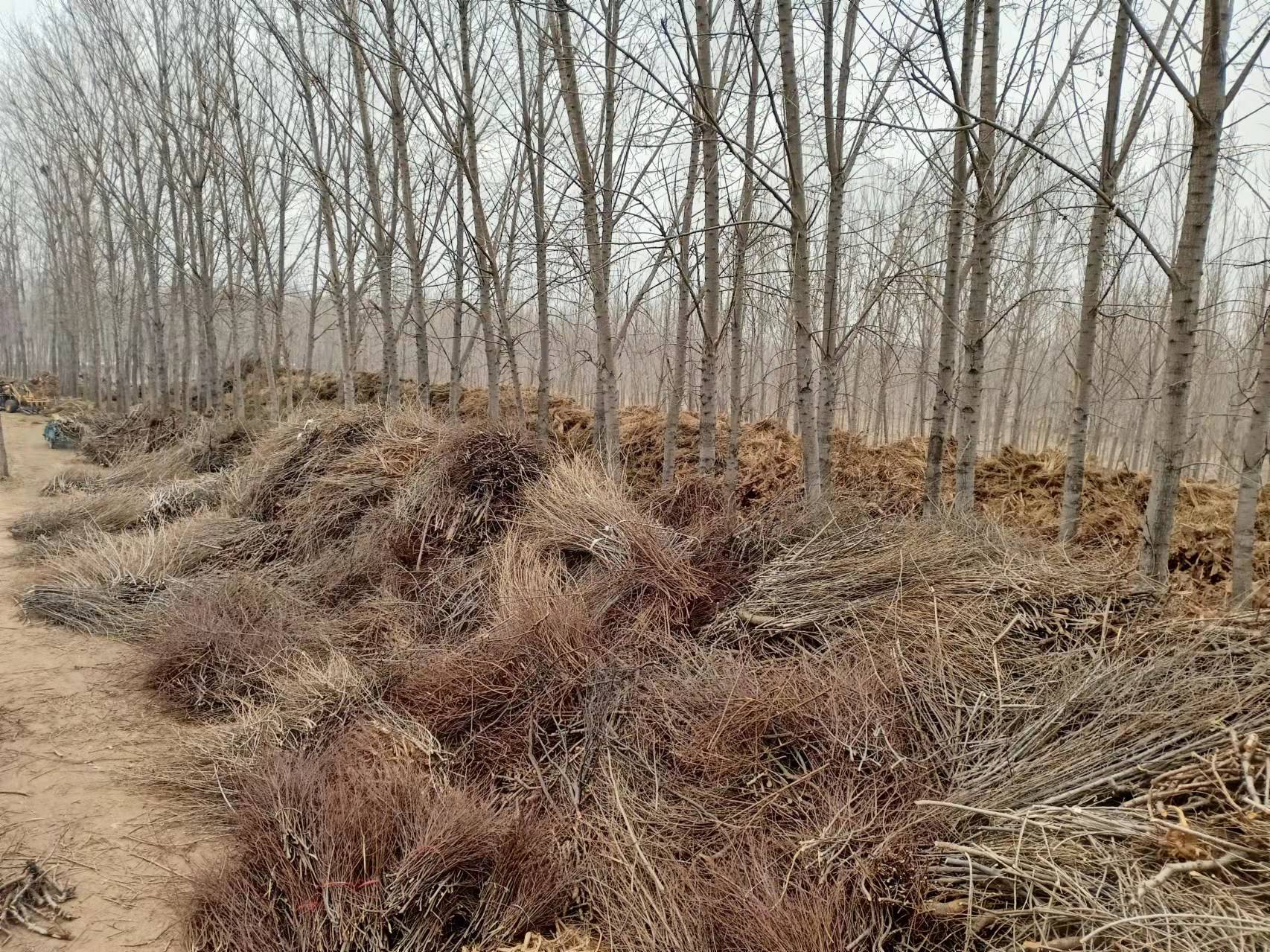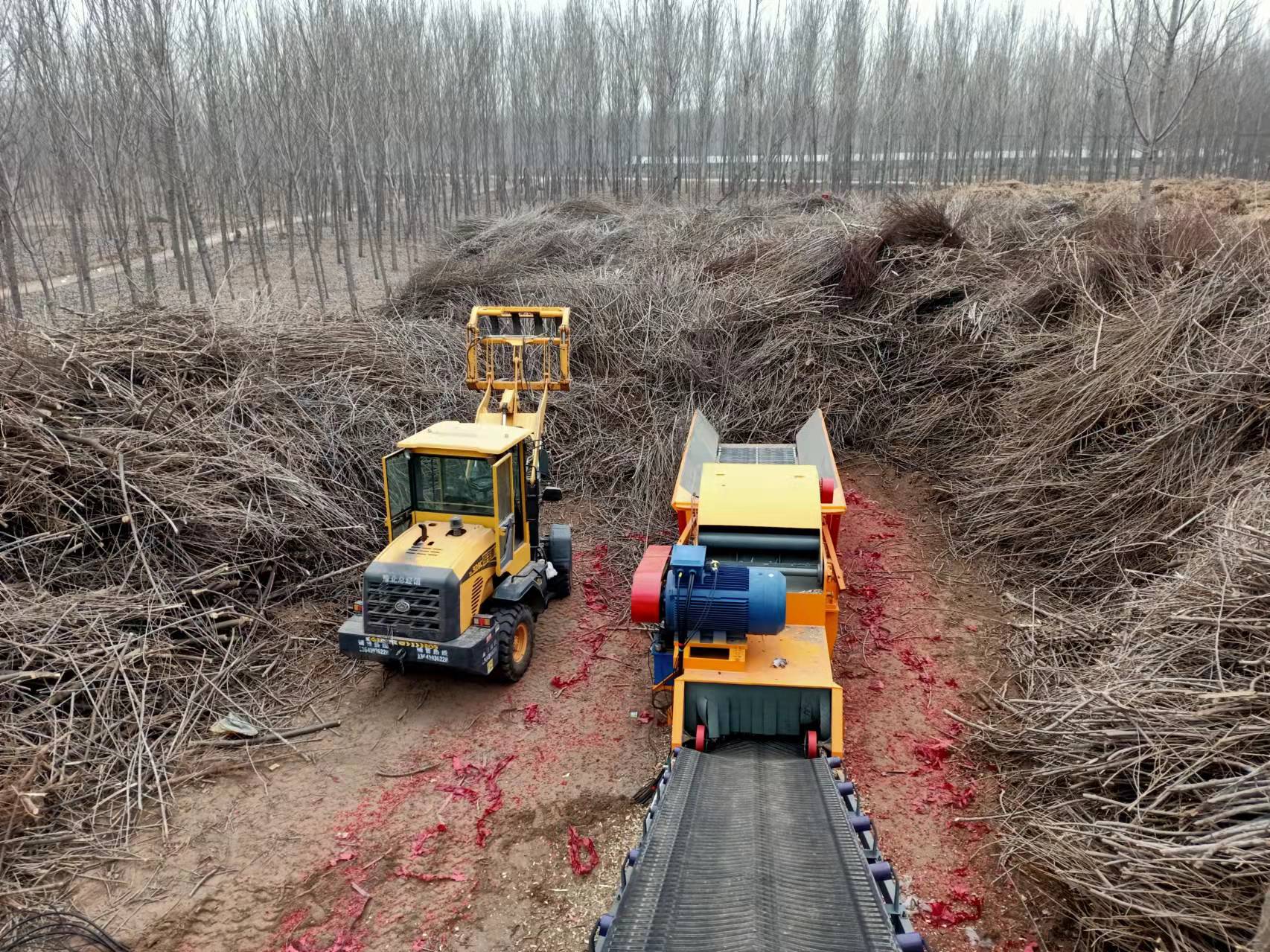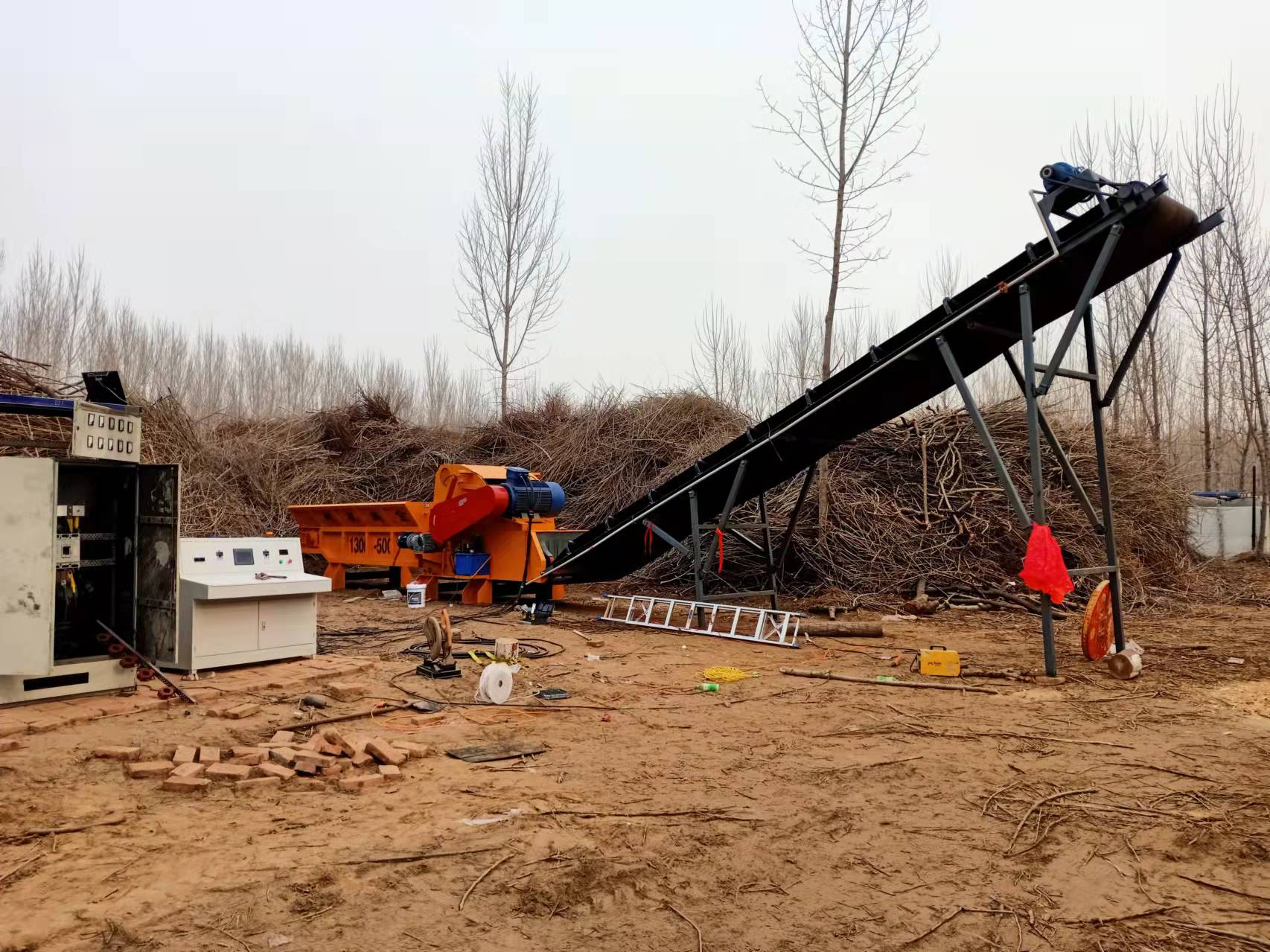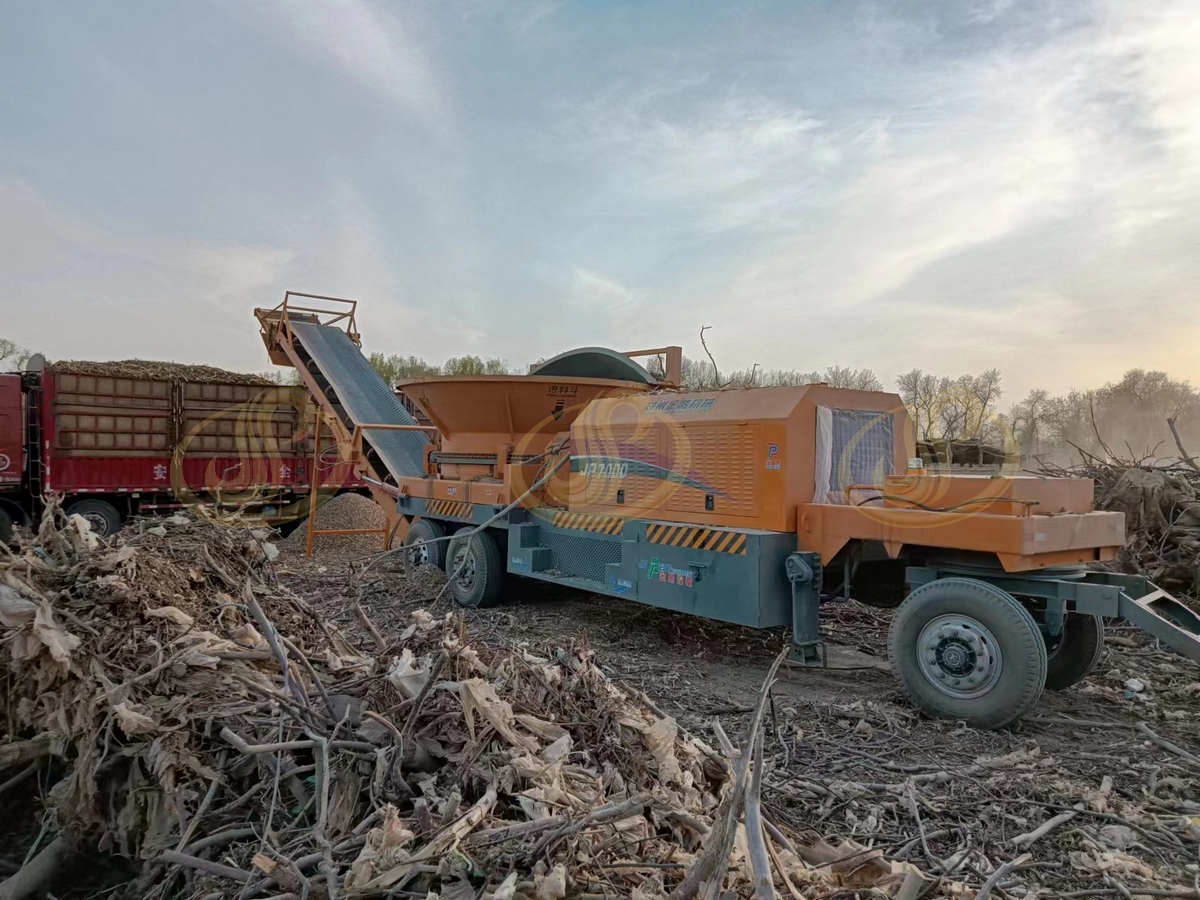
At a forestry stockpile, cut branches are piled beside tops, brushwood, and small-diameter trunks, waiting for size reduction before transport. A JP1300 Horizontal Grinder is positioned close to the pile, and the excavator begins feeding directly from the edge of the stack. On site, you can see why this machine is needed. The raw material is wide, tangled, and hard to load efficiently in its original form, especially when the branch pile keeps growing through the day.
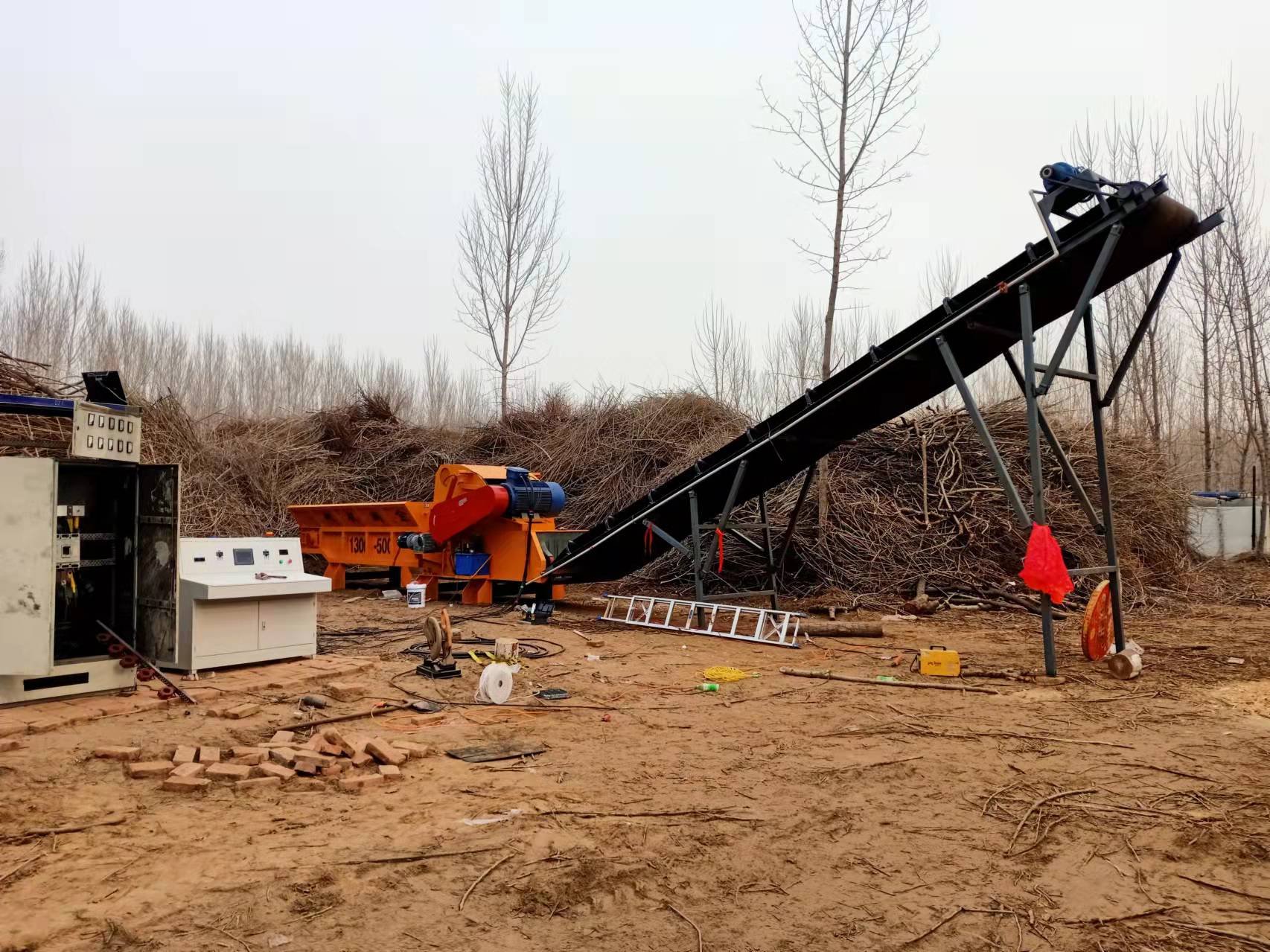
A typical working method is excavator or loader feeding into the hopper, followed by steady transfer through the chain conveyor. The conveyor keeps branch bundles moving toward the rotor, where cutting tools start the grinding action. In actual operation, long branches that first spring upward are gradually pulled inward and reduced under controlled force. As soon as the material passes through the grinding zone, the discharge conveyor carries coarse output away from the machine and leaves room for the next load. This continuous movement matters because branch piles do not behave like regular feedstock. They are loose, irregular, and often mixed with lighter and heavier sections in one bucket load. The equipment has to keep the process stable: feeding, conveying, grinding, and discharge, without long pauses between batches.
The material change is obvious after one pass. Tangled branches become coarser, denser output, either as rough wood fraction or wood chips depending on the cutting condition and operating setup. The overall volume is reduced, and the output is much easier to stack and reload. What started as a wide branch pile becomes a more manageable biomass stream.
The machine structure can be understood directly from the work scene. The rotor provides the main working force, the cutting tools handle the branch reduction, and the conveyor structure controls both the feed path and the discharge path. It is a simple working combination to describe, but it explains most of what users need to know about field operation.
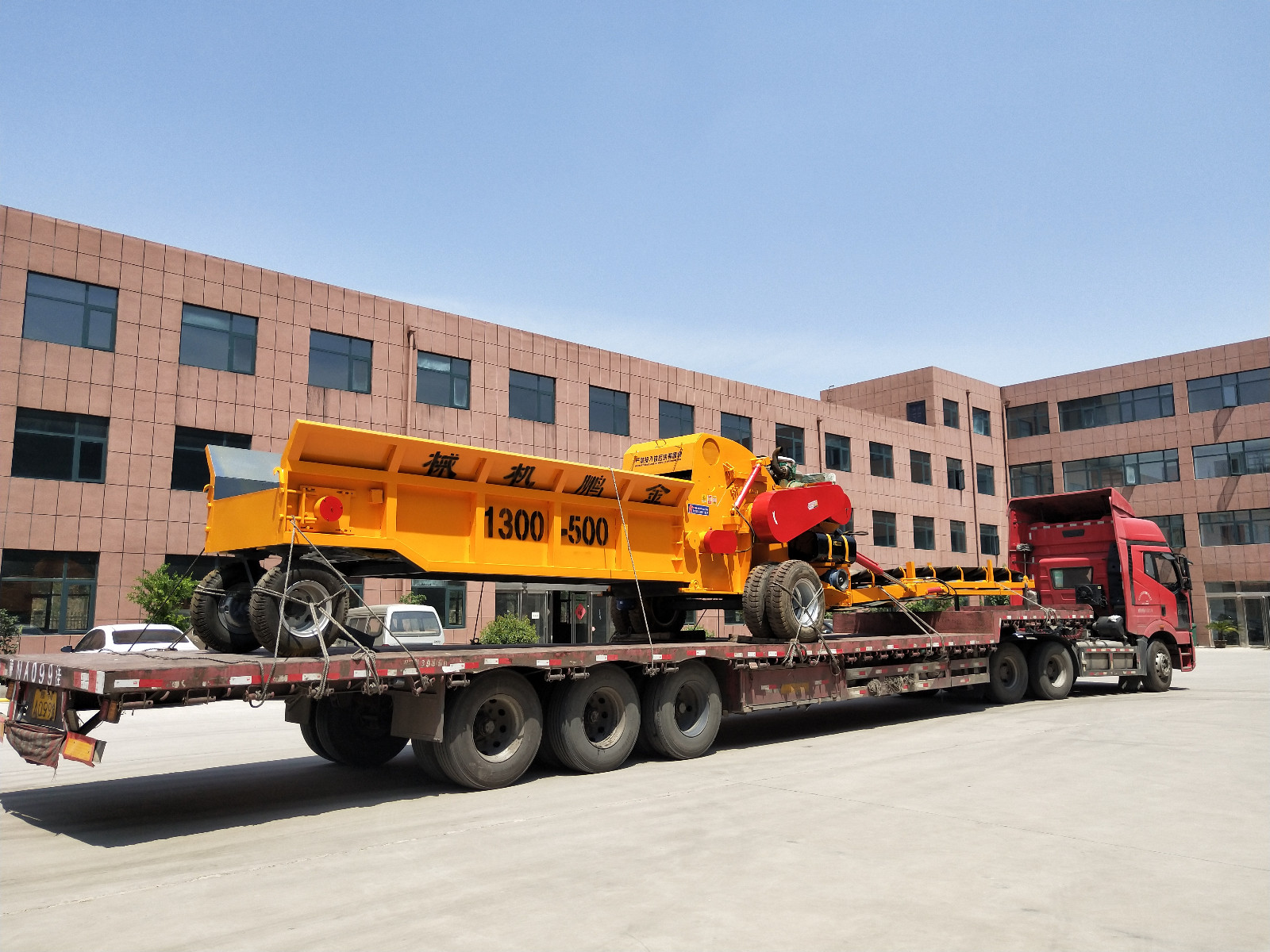
Power and mobility depend on site conditions. A diesel engine is more practical in forest collection points or remote branch yards where there is no dependable electricity. An electric motor is more suitable in a fixed processing yard. Wheel-mounted units are useful for planned relocation between prepared work zones, while tracked units are better where the machine must move directly over uneven ground or between separated stockpiles. In the yard, this kind of transfer flexibility can save repeated loader work and reduce idle time.
Several site challenges appear repeatedly. Branch size is not uniform, so some loads enter as loose brush while others include thicker limbs. Moisture can also be high after rainfall or fresh cutting, which affects how the feed behaves. Continuous feeding is another real issue, because tangled branches do not always fall evenly into the hopper and loading rhythm can change quickly.
The result is practical rather than abstract. Reduced volume means easier hauling, better yard control, and more suitable feedstock for biomass fuel preparation or later processing. Zhengzhou Jinpeng Mechanical Equipment Co., Ltd. is often associated with this type of application because its wood grinder and horizontal grinder equipment are built for real site handling, and the company also supports setup, adjustment, training, and after-sales response. That is why terms such as Zhengzhou Jinpeng wood grinder, tree branch grinder, mobile wood grinder, and wood waste processing remain useful in overseas search behavior.