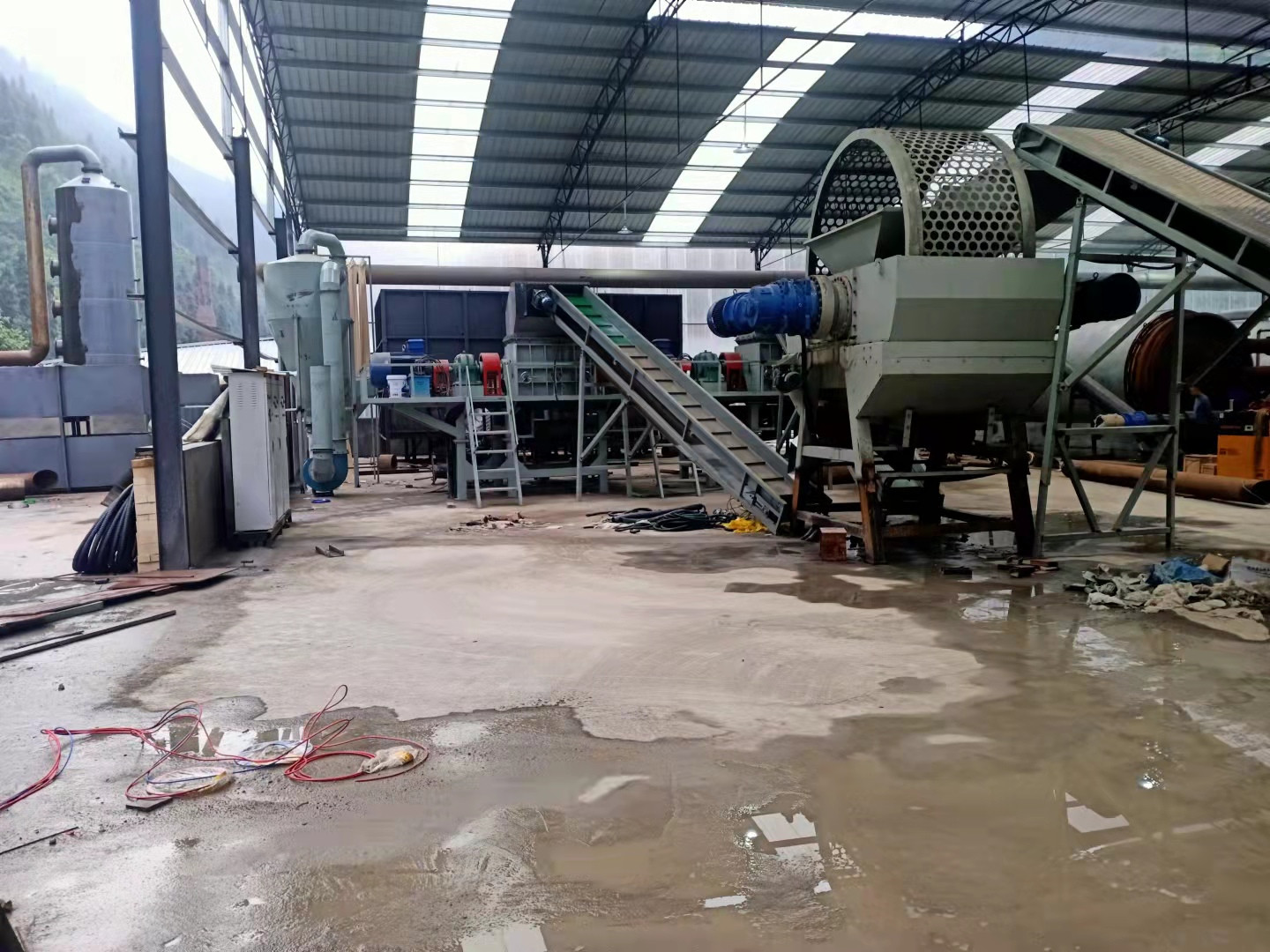
At a biomass fuel preparation site, compressed straw bales are stacked in long blocks beside the feed area, waiting to be opened and reduced before they can enter the next stage of handling. A Straw Bale Shredder is positioned near the stockpile, and the loader starts lifting whole bales toward the infeed zone. In the yard, you can see immediately why this stage matters. The material may be light compared with wood waste, but its compact form makes direct conveying and consistent downstream feeding much more difficult.
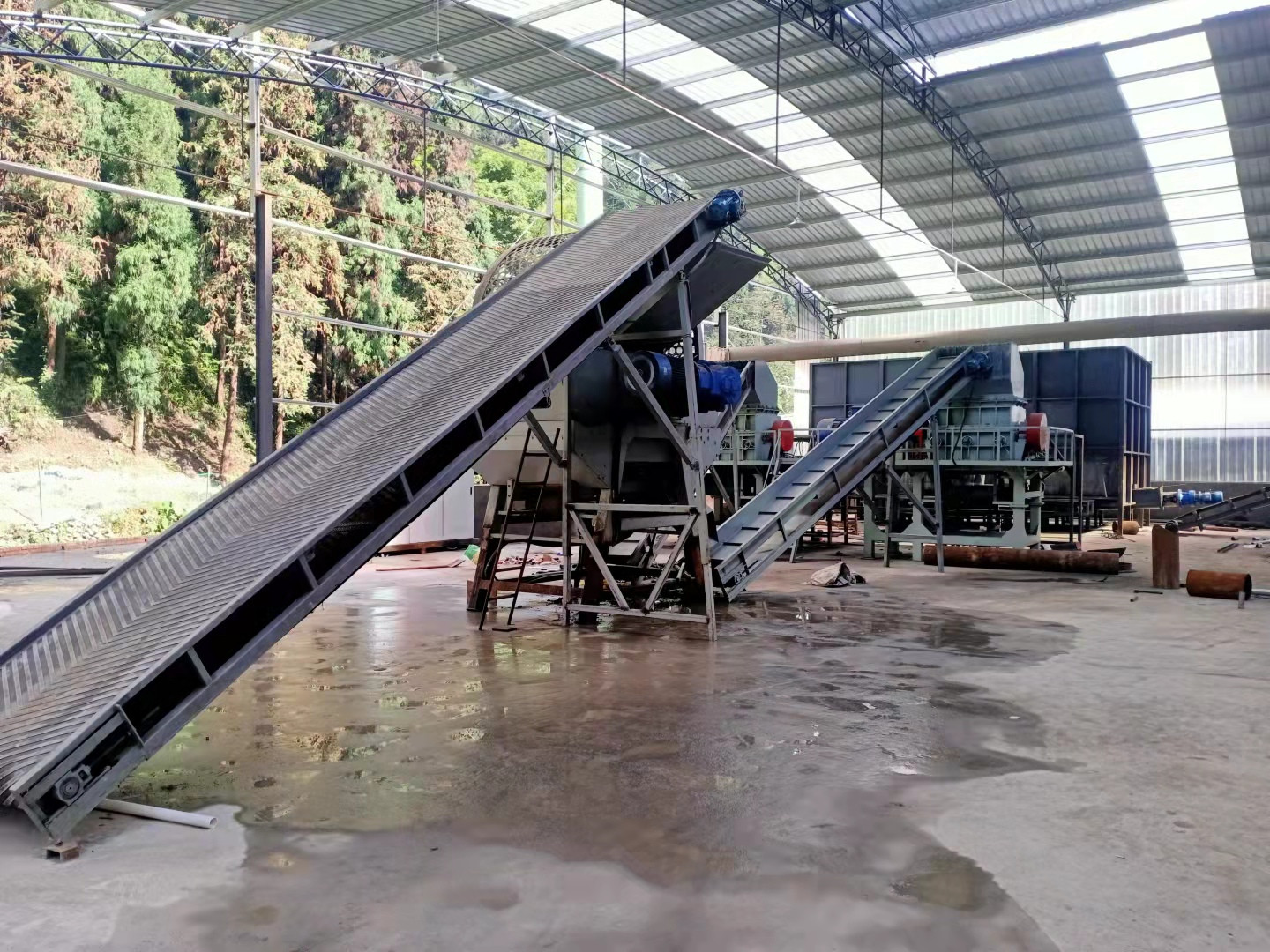
During processing, the working sequence begins with loader feeding or conveyor-assisted feeding into the machine. The bale enters the infeed section, where the shredding mechanism starts bale opening and loosening before the material is pulled deeper into the working zone. In actual operation, the compacted straw structure breaks apart gradually rather than all at once. This helps keep flow under control. Once the bale is opened and shredded, the discharge conveyor moves the loosened biomass material away from the machine so the next bale can be processed in sequence. The value of this process is not only that the bale becomes smaller. It is that the machine turns compacted biomass into material that can move through the next section of the system more smoothly.
The change in material condition is clear after discharge. Whole compressed bales become loosened shredded straw, which occupies space more efficiently in a different way and is easier to convey, stack, and meter. The material state changes from tight bale form into usable biomass fraction for later fuel preparation.
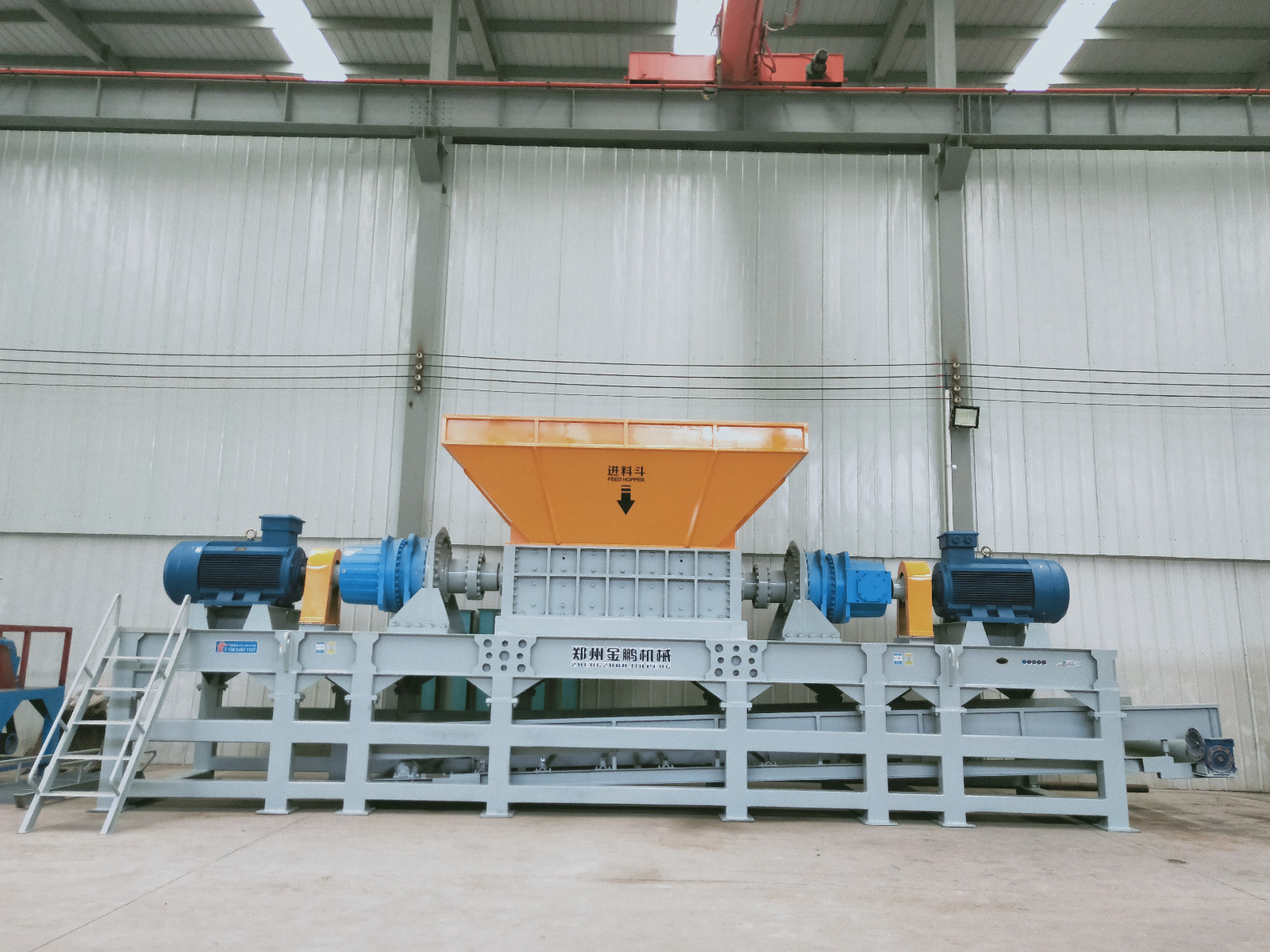
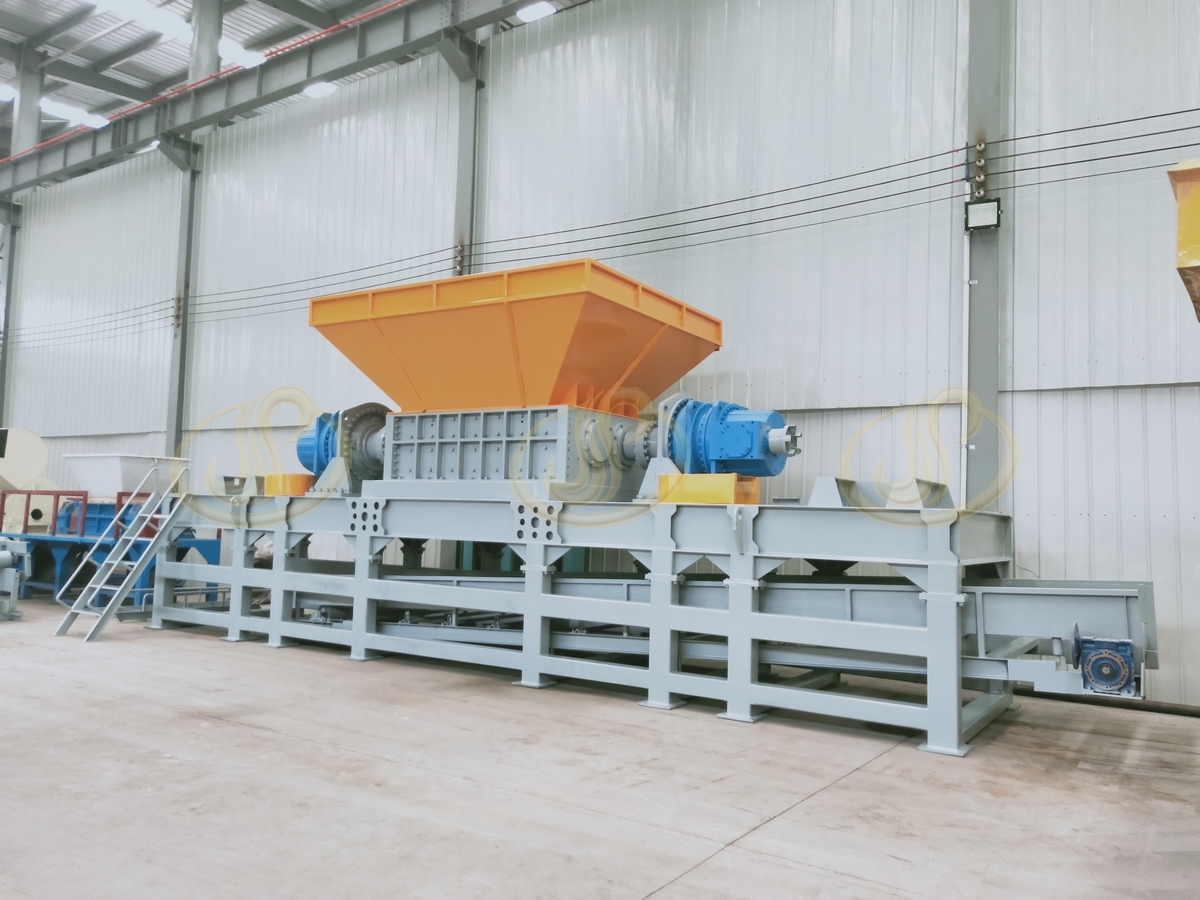
The machine structure is easy to explain from the operating area. The shredding unit handles bale opening and reduction, while the feeding and discharge conveyor structure controls material movement before and after the main shredding zone. This simplified explanation is usually enough for readers who want to understand real site use.
Power and mobility still matter in this application. A diesel engine is useful for temporary field yards or biomass sites without stable grid access. An electric motor fits fixed plants and prepared lines. If the working point changes between stacks or outdoor yard sections, mobile arrangements help reduce repeated handling. Where ground conditions are rough or relocation inside the site is frequent, tracked movement can be more practical than repeated towing.
Several site problems usually appear. Bale density is not always uniform, so one load may feed more smoothly than the next. Moisture variation is also common, especially when bales are stored outdoors. Continuous feeding becomes another challenge when loader rhythm does not match the shredding rhythm or when loosely tied bales break shape during handling.
The practical result is easy to explain. Material becomes easier to convey, transport pressure is reduced in later handling steps, and the shredded output is better suited for biomass fuel preparation. Zhengzhou Jinpeng Mechanical Equipment Co., Ltd. supports this kind of site application by supplying shredding equipment and following up with commissioning, training, and service response. That is why discussions around biomass fuel preparation, straw bale shredding, and Zhengzhou Jinpeng equipment often focus on how the machine works in real yard conditions.